http://en.wikipedia.org/wiki/Mod_(video_gaming)
Mount&Blade and M&B:Warband are sandbox computer RPGs set in a pseudo-medieval world.
http://www.taleworlds.com/
-------------------------------------------------------------------------------------------------------------------------------
Note: this post is inspired by the discussion about the differences between two LOTR mods.
The Veiled Stars is a relatively new project in progress headed by Jarvisimo:
http://www.moddb.com/mods/the-veiled-stars
The Last Days of the Third Age is a mod originally for the older M&B, now also ported for Warband. I've been a member on the TLD team for quite a few years now, contributing everything from concept art and lore knowledge to writing and sound design.
http://www.moddb.com/mods/the-last-days
Understandably, there's a certain level of animosity between fans of these mods, as LOTR total conversions are hard to find and discussions online usually get quite heated. This is not meant to pour oil into the flames, rather I'm using the situation as a setup for an article I've been meaning to write for a while.
PS: Guys, remember your forums are public and anyone can stumble upon your bitter put-down posts about TLD. I understand where you're coming from, but it's still a bit rude. When we talk shit about you, we at least have the sense to do it in our hidden dev forum. ;P
-------------------------------------------------------------------------------------------------------------------------------
The background of The Last Days
TLD is actually three different mods. There are layers in both assets (visual/sound/writing..) and scripted gameplay features. This could be quite the history lesson, so I'll summarize in short:
1.) The good old TLD from when our leader Ancientwanker was still around. (2007-2009) For M&B 0.808, the mod became a real total conversion and not just the basic game with a few models swapped for orcs and Gondorian soldiers. (which is what it all began as, in the ancient beta days)
AW (Ancientwanker) had big plans for a whole system of quests, for the War of the Ring and other features we sadly never learnt about. (due to him disappearing without a trace, it's quite likely he passed away) This layer survives in some of the assets (bits of orc equipment, lots of Harad's design, Rhun's entire style laced with Conan the Barbarian etc.) and in some features (the "Sorcerer of Mirkwood" quest is a remnant of a stealth system coded by Yoshiboy, which we sadly dropped in rest of the mod), but more importantly - in the idea of a design plan. Only when AW was gone, I realized we had little idea where to go from there. Or rather, everyone had their own ideas and no clue what AW's TLD was supposed to be as a whole.
Here's an interesting video for comparison, someone playing the 0.808 version in 2011. :)
2.) TLD up to version 3.0 released for M&B 1.011. (2009-2011) This was the silver age. We mourned the loss of our glorious leader, wondered what his vision was and tried to reach it by running blindly into several directions. We had absolutely wonderful people on the team and what the mod is today stands on what they've done then. The war system, the quest writing, the companions, all the visuals and settlement scenes, all the custom sound work, animations and even entire pieces of development software created to make TLD.
Lots of talented people also meant lots of arguing and design disputes. I like to believe it was necessary to distill TLD into greatness, but it wasn't always pleasant. Still, we agreed on the large concept, TLD was supposed to be a total conversion with emphasis on player immersion and focus on the War of the Ring, with occasional emergent lore-friendly roleplaying and exploration.
Mostly due to burnout, frustration caused by engine limitation and personal conflicts, the team fell apart after patching up the initial release. This is the TLD we've had and played for a few years.
3.) TLD up till now. Only a few people remain of the original team, active here and there when they feel like it. We've gotten a new programmer who's done great work in balancing the mod and adding a few new features (CppCoder). It's been mostly me posing as the voice of TLD for some time now, and I've been the annoying bugger who can't quite let go of this thing. Pushing and pulling everyone I could muster into working on the mod at least a bit. A few graphics assets have been redone, big plans were had in regards to finishing incomplete quests etc.
Then Swyter (of Star Wars: Conquest fame) decided to port the mod to Warband. I happily stayed out of his way and helped wherever my limited skills allowed it.
Keeping your core tight
I think the two major reasons why TLD is popular with players are:
1.) It's a LOTR mod. Hands down, this is the reason why people download it. There's a great hunger for LOTR inspired games, probably because there are so few actually good ones. Mods help fill this niche.
2.) It's designed like a game, (one that plays different enough to M&B itself) with a clear focus on a specific type of gameplay and player experience.
TLD's focus on the War originated in the very first of the three ages (Three ages of The Last Days of the Third Age...get it? ;-P). The native game at the time didn't have a real war system, you couldn't win. All you could do was fight the never ending line of respawning enemy parties. To have sides in the war with the possibility of losing/winning the war by defeating enemies who can actually die was a new concept, so we built on it a lot in the future.
M&B later expanded on the sandbox element of the game, with owning villages and having obligations as a vassal of a lord etc.
During the silver age, we discussed this and decided to keep everything like marriage and fief management out. As we say in the Manual, the mod is set during the War of the Ring and to settle down with a wife, to manage building of a church and fences and whatnot, it just doesn't make sense.
Content and features making sense in the setting is key, when introducing new stuff we always asked if it's based on anything in Tolkien's books. If not, does it seem like something that would plausibly happen in Middle Earth? The resource/rank/influence points system replacing native dinar currency is a result of this process. Not many characters in the books actually ever talk about money and if they do, it's presented as a negative thing. When military tactics are discussed, nobody asks about costs and supplies. They know the stakes, it's all or nothing.
So you're not being paid money, you don't "buy" items. Instead you're supplied by your faction, you requisition items from the armoury based on how much your faction appreciates you. Many heated discussions were had, some of our coders still disagree with the decision, but the system seems to get about an equal amount of positive and negative opinions from players, so I take it as a matter of taste and not a gamebreaking annoyance.
Last Level Press - a review and a great analysis of TLD
Setting is king, especially if you're doing LOTR. There are so many Tolkien nerds who will understand easter eggs, tiny references and nods. Who will spot the tiniest of inaccuracies. So we agreed to change as much writing to be setting appropriate as possible, we've added little touches like an ingame elven calendar, or messages telling you which microregion of Middle Earth you're entering. Which brings me to another aspect we tried to keep tight - the map. Comments about our map being too small amuse me. We still get questions if Eriador and other western areas will become available later. Nope, they won't. We actually downsized the map during development, because it felt too empty and we couldn't populate it with more moving entities for performance reasons. Besides "being able to go there", there wasn't any benefit in mapping the entirety of Middle Earth.
If The Veiled Stars map ends up a lot bigger (which previews indicate), I have to wonder - what are they going to fill it with? Unlike TLD, TVS keeps the town+villages model of Warband, so that's content we couldn't use. Will it be fun content? Enjoy making a bajillion custom scenes! Ask Triglav how fun it was making all our scenes by himself and how long it took. And thinking of ways to fill the map with fun and interesting content is important for TVS, as it's (so far) presented as a sandboxy roleplaying experience, not a wargame with a bit of exploration/roleplaying.
In conclusion - nobody's saying you need to read books on game design and write down pages and pages of design docs. Just sit down and write a page or two. Start with one or two sentences, summarizing what the mod's about and why anyone who's played hundreds of other mods should play it. Don't list features, write down what kind of an experience you want it to be.
When you have the essence, set limits of what's currently possible and add a pile of features you'd like to have. Then prune the pile and throw out the most difficult or labour intensive features. (or keep them for later) The pile will only grow taller in development, so being honest to yourself about what you're capable of is definitely an advantage.
When mods pretend to be games
Total conversions are extremely difficult to make and there are good reasons why most of them inevitably fail to deliver a playable version. There's a very quick turnover of people contributing, one has to be prepared to lose members all the time, due to a host of reasons. They come in wishing to help and leave a week to a few months later.With a mod like TLD or TVS, you're building a library of assets (graphics, sounds, music, animations) and an underlying set of systems that make the game work. (programming) TLD started with AW doing the coding and contributors working on assets at the same time - this is a pretty great way to do things. You're not wasting time and you have something that works as a game and already looks like one too.
This is not the case with most mods though, many beginners start by learning 3D and making assets. They model a few items, put them in game and call it a mod. This kind of item swap is still useful, because pretty screenshots might lead supporters and contributors to you, even if the gameplay is just the same as the native game.
Pretty visuals are often the first goal of a mod. It's not wrong, we definitely wanted TLD to be as pretty as it possibly could. It's equally important to create graphics assets with optimization in mind. Especially if you're not making a game where you can adjust how the engine handles assets, keeping stuff tidy, clean and lean is essential. Often it's a performance-driven choice between a handful of beautiful items and a variety of lower resolution ones. It's about the time it takes to create them and also the final combined effect they have in game. TLD (while being made by many contributors) tried to keep a unified style to the graphics. The models are low poly, the textures are small and we don't use normal maps. I still maintain that they look good, even nicer now, in Warband's superior rendering engine.
I suppose there are different kinds of modders and different kinds of players. We aimed for player immersion and a powerful roleplaying experience. On the other hand, mods for Skyrim adding incredibly pretty items are very popular. Some players simply want to admire their own character, take pretty screenshots and dick around in the sandbox.
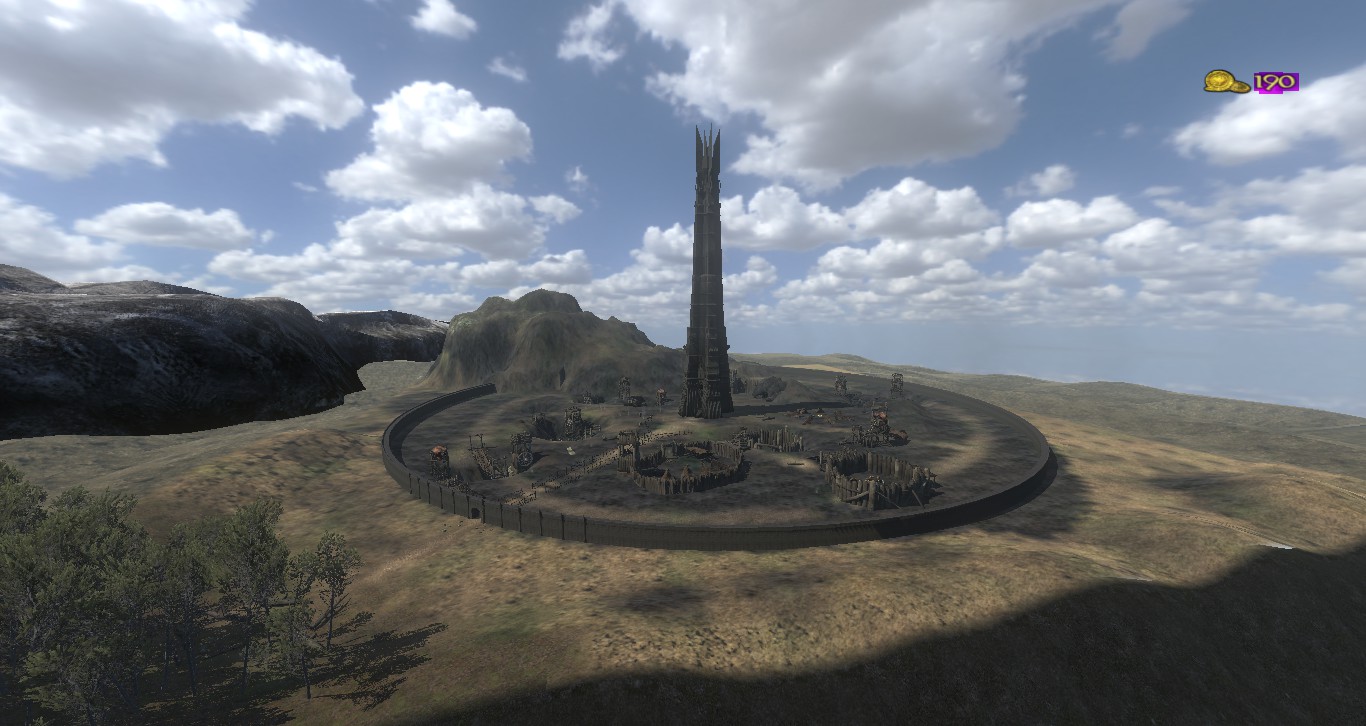
The Veiled Stars: Gorgeous Isengard
Eventually, you want to release something people could play. All too often, mods with ambitious plans try to embrace the development model of actual games. They publish previews, go into alpha and beta releases and keep patching after the actual release. TLD did this as well, but we've been always quite good at keeping development details to ourselves until it was time to release.
With TLD being open source since last year, I expected TVS to use our graphics assets at first while building their own code systems and implementing various features. And replacing them with their nicer Warband-specific assets in the process. This is after all how game development usually goes - you build a prototype first and start expanding and polishing it later.
If Jarvisimo isn't too mad at me at this point, I'd offer this as a suggestion. Spend more time planning, designing systems and coding, leave assets for later or have someone else make them. Since you're already releasing alpha versions, you'd benefit from having something fun to play, something different and new and interesting. Warband in a different map with a bunch of pretty models won't hold interest for long.
That said, player responses and feedback are a difficult aspect of modding. I'm infamous for being a horrible prick to everyone on our forums. Answering the same ignorant questions over and over and dealing with lazy anonymous internet entities can be very tiresome, so beware! If you can, get a PR person to do it for you. Your mental health will thank you years from now.
Almost the end
We're fully aware that Swyter's port of TLD put Jarvi and TVS into a difficult position, I've actually read your disappointed post on your forums. Still, us talking about it is not just empty words. There truly is no reason why there should be space for only one LOTR mod for Warband, or why we should measure their worth by pretty graphics or size of the map. If you have a vision, if you design with that vision in mind and if you keep hammering at it, it'll end up as something you and others will want to play. That (not praise or ratings), to me, is the ultimate goal of modding.
-------------------------------------------------------------------------------------------------------------------------------
I've been meaning to write about the history of TLD for a while, a bit of a post mortem. What it was like with AW, after he left, to spill a bit of the behind the scenes gossip and so on. If there's any interest in that, I'll do it. Or I could record another podcast. We'll see if any fans read this far. ;)


